How To Make MONEY Freelancing [Even If You Are A Beginner]
To make money freelancing, you have to follow the following strategies: Now let’s learn how these strategies can help you build your freelancing career. So stay tuned and read till…

BDSM, including scenarios like shemales in bondage, is a complex and multifaceted aspect of human sexuality that involves consent, communication, and mutual respect. For those interested, approaching the topic with an open mind and a commitment to learning about and respecting boundaries can be a positive way to explore these interests.
The transgender community is a vital and distinct part of the broader LGBTQ+ culture, characterized by a shared journey toward authentic self-expression and a long history of advocacy for gender autonomy. While often grouped under the LGBTQ+ umbrella, transgender experiences focus specifically on —one's internal sense of being male, female, or another gender—rather than sexual orientation. Core Identity and Community Values
Cover events, workshops, or conferences focused on BDSM and bondage. These can be great resources for learning and community building.
The modern movement was sparked by the resistance at the Stonewall Inn. Key figures like Marsha P. Johnson and Sylvia Rivera, both transgender women of color, were in the vanguard of these riots. Activism and the Struggle for Inclusion
Review different types of bondage equipment and materials. Discuss their uses, pros, and cons, and provide recommendations for both beginners and more experienced practitioners. shemales in bondage
To fully understand transgender integration into LGBTQ+ culture, one must distinguish between gender identity and sexual orientation. Sexual orientation concerns whom a person is attracted to (e.g., lesbian, gay, bisexual). Gender identity concerns a person’s internal, deeply felt sense of being male, female, a blend of both, or neither (e.g., transgender, non-binary, agender).
This shared history created a foundation of solidarity. Transgender people provided the "radical" spark that demanded more than just tolerance; they demanded the right to exist authentically in public spaces. The "T" in the Umbrella: Identity vs. Orientation
The modern LGBTQ+ rights movement didn’t start in boardrooms; it started in the streets, led largely by transgender women of color. Figures like and Sylvia Rivera were at the forefront of the 1969 Stonewall Uprising. At the time, the distinction between "gay" and "transgender" was less rigid in the public eye—everyone who defied traditional gender and sexual norms was grouped together.
The modern LGBTQ+ rights movement was built on the courage of transgender individuals, particularly trans women of color. Historically, spaces catering to sexual minorities and gender-variant people overlapped out of necessity, creating a shared culture of survival. The Spark of Resistance BDSM, including scenarios like shemales in bondage, is
In the acronym LGBTQ+, the "T" is often the most misunderstood. Casual observers might assume that being transgender is a sexual orientation, akin to being gay or bisexual. This is incorrect. Sexual orientation is about who you go to bed with . Gender identity is about who you go to bed as .
Are there you want to expand upon (e.g., media representation, international perspectives)? What is your preferred word count or layout structure? Share public link
To understand modern LGBTQ culture, one cannot simply glance at the surface of parades and pronouns. One must dive into the specific, nuanced, and evolving relationship between transgender individuals and the queer majority. This is a story of solidarity, friction, shared trauma, and unbreakable resilience.
The ballroom scene birthed "voguing"—a stylized form of dance that mimics high-fashion modeling poses. It also generated a vast vocabulary that now dominates global pop culture. Terms like "spilling tea," "throwing shade," "serving face," "work," and "reading" were created in these spaces by trans and queer people of color decades before they entered the mainstream lexicon. Navigating the Dynamic: Intersection and Tension While often grouped under the LGBTQ+ umbrella, transgender
Hmm, the keyword itself pairs two related but distinct concepts. The transgender community is a subset of the broader LGBTQ culture, but it has its own unique history and struggles. I should avoid conflating them. The user probably wants an article that clarifies the relationship, highlights the "T" in LGBTQ, and explains how trans experiences and contributions have shaped and been shaped by the larger movement.
. These pioneers didn't just fight for the right to exist; they established the first organizations, like (Street Transvestite Action Revolutionaries), to provide housing and support for the most vulnerable members of the community. Their legacy remains the blueprint for modern intersectional activism. A Cultural Renaissance
Create instructional videos or photo guides demonstrating various bondage techniques. Ensure that all models are consenting adults and that safety and proper technique are emphasized.
In the collective imagination, the LGBTQ+ community is often symbolized by a rainbow: a spectrum of colors blended into a single, beautiful flag. However, for decades, a specific narrative has often dominated the public understanding of that spectrum—one centered on gay and lesbian experiences. While these stories are vital, they represent only a segment of the whole. To truly understand LGBTQ+ culture, one must look at its backbone, its revolutionary spirit, and its most vulnerable yet resilient members: the transgender community.
Despite this, the "T" stuck. By the 1990s, the acronym LGBTQ became standard, acknowledging that the fight for sexual orientation (who you love) and gender identity (who you are) are intrinsically linked by a common enemy: heteronormativity.
This "trans-exclusionary radical feminist" (TERF) ideology, though loud on social media, is statistically a fringe position. However, it has caused immense psychological damage to trans people who once found solace in gay bars. The majority of LGBTQ culture rejects TERFs, viewing the fight for bodily autonomy and self-determination as the central tenet of all queer liberation. You cannot argue that a man cannot become a woman while simultaneously arguing that a woman should have the right to wear a suit and marry a woman. The logic is self-defeating.

He is a professional blogger, affiliate marketer, SEO expert, and content strategist with several years of experience in the digital marketing field. He is known for his exceptional skills in creating engaging and informative content that resonates with his audience. Sayem's dedication to his work and passion for learning has earned him a reputation as a thought leader in the industry.
![How To Make MONEY Freelancing [Even If You Are A Beginner]](https://facileway.com/wp-content/uploads/2022/01/How-To-Make-MONEY-Freelancing-Even-If-You-Are-A-Beginner-768x432.png.webp)
To make money freelancing, you have to follow the following strategies: Now let’s learn how these strategies can help you build your freelancing career. So stay tuned and read till…
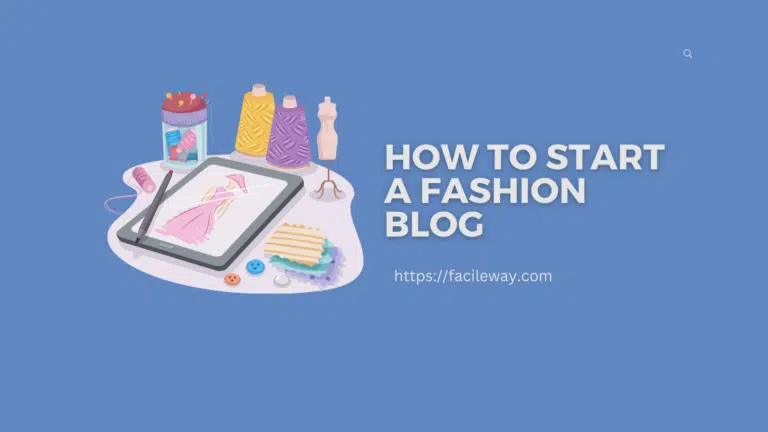
Hey Future Fashion Blogger! You are here to know how to start a fashion blog in 2025 from scratch on WordPress, right? Welcome! I will try to explain everything that…
I know you are kinda in shock so I am telling you this is the best time to start your blog in 2025. Think about the fresh perspectives and trends…
You wanna start a blog? Now you are thinking about what you should write the first blog post about. This post is all about writing your first blog post as…

Increasing the readership of your blog is an art. Blogging is a great way of generating traffic, but you need to keep in mind that traffic methods change over time….

Are you looking for the best Google AdSense alternatives to monetize your website? It’s the biggest platform in the display ads industry but not the only Advertising platform you can…