
Every pivotal play, every triumphant triumph, and every heart-stopping moment, captured and compiled without having to lift a finger.
With our virtual camera tracking system, parents and staff are free to enjoy the game, knowing we've got the filming covered.
But we don't stop at official games, with 'Practice Mode', you can also capture tryouts, training sessions, and scrimmages.

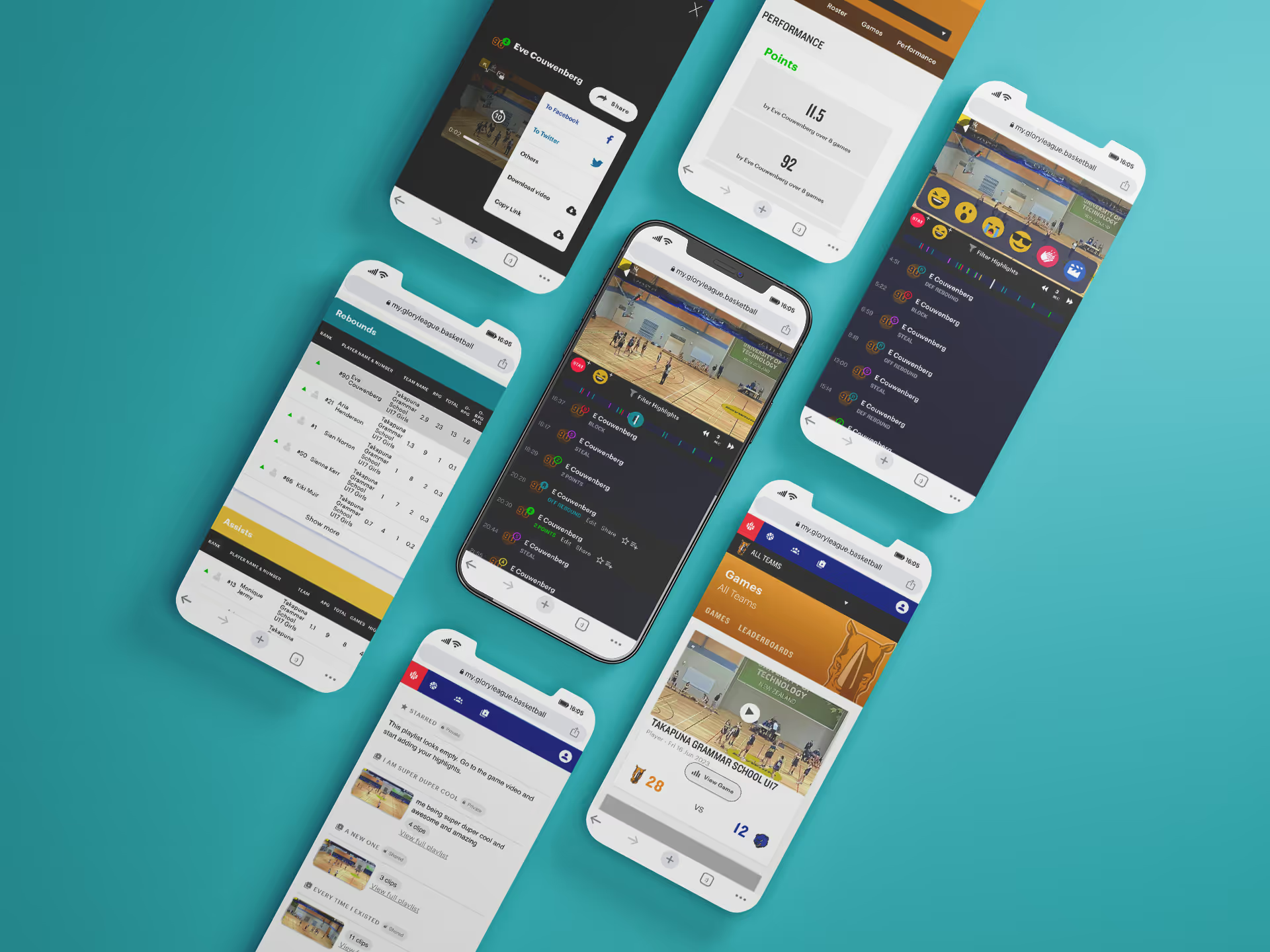
Downloadable highlights so players can keep their proudest moments forever. Full game videos for all players, not only great for players but a priceless feature for family members who can't be there in person.
Attract advertisers with a range of options, from digital in-game banners and center court logos to email marketing.
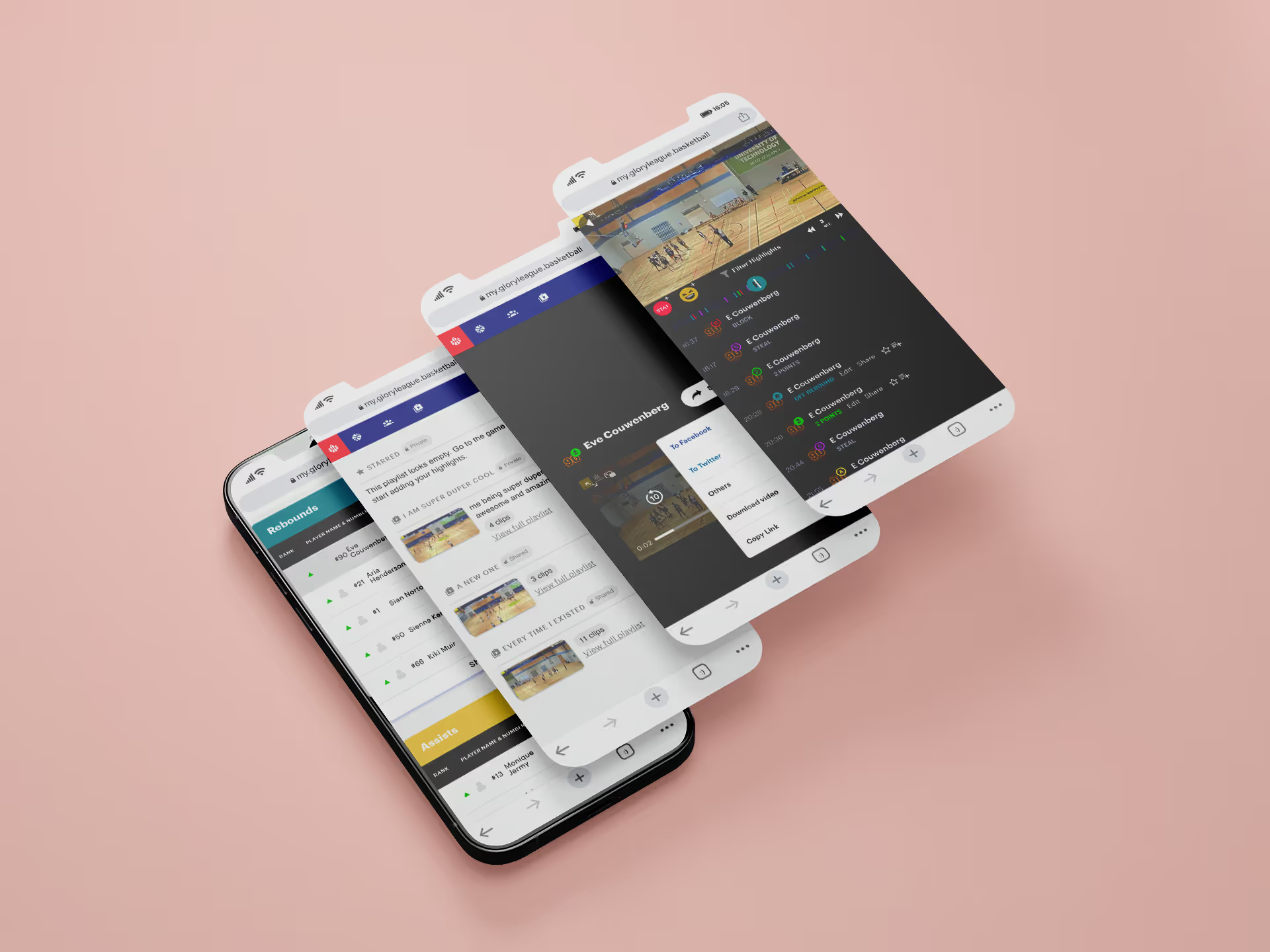
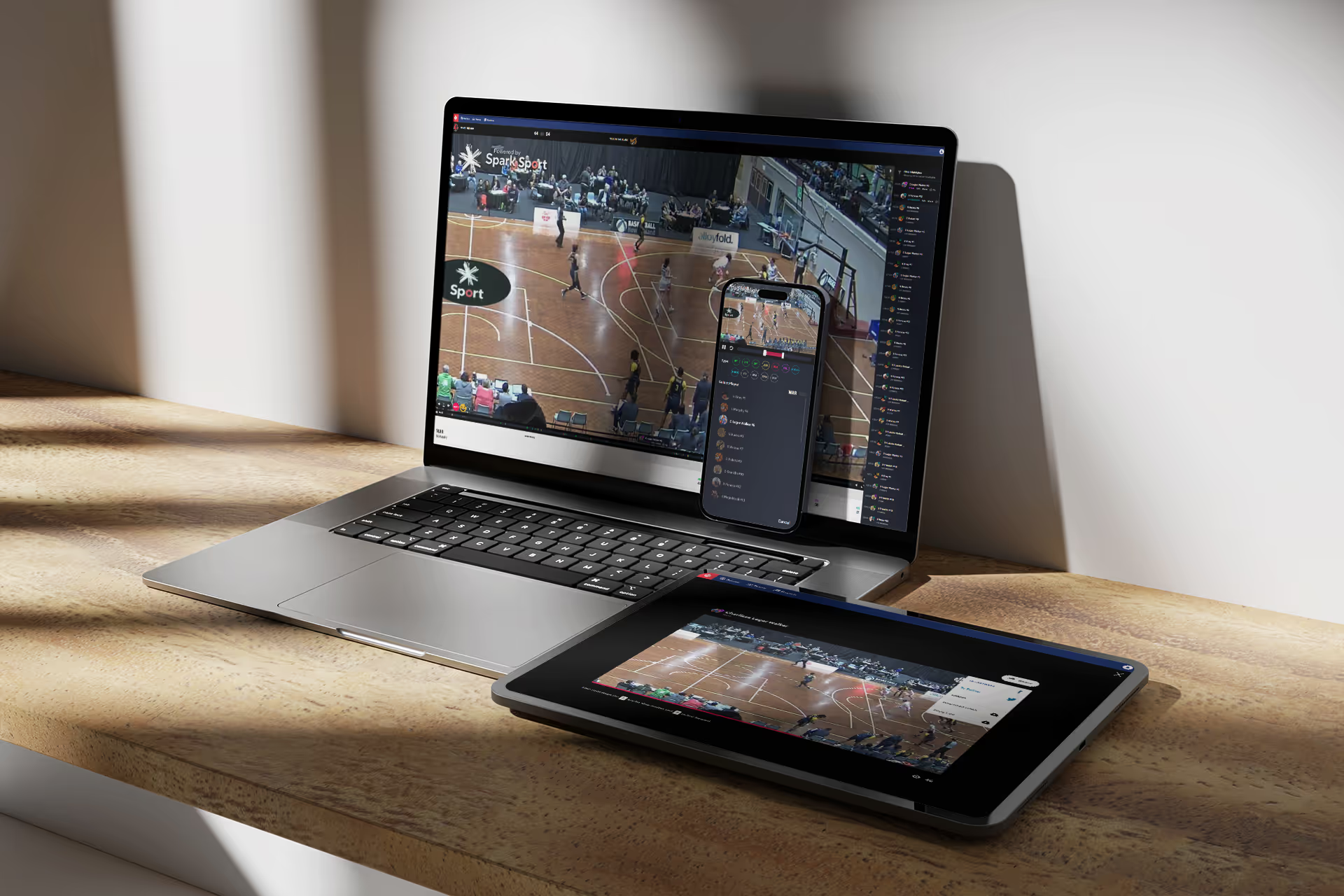
Our technology puts players, coaches, and court-side spectators in the spotlight, promoting better on-court and courtside behaviour as well as reducing administrative time spent handling incidents.
Our seamless integration with competition management systems and scoring apps makes automatic recording of every match in the schedule too easy.











By breaking a massive system into these granular units, complexity becomes manageable. You aren't "building a banking app"; you are "calculating the interest on a savings account." This shift in language ensures that every hour of engineering is tethered to a specific business outcome. 2. The Five-Step Engine
FDD was built for large teams. Its structured approach prevents the "chaos" that can sometimes occur in Scrum when scaling to hundreds of developers.
FDD operates on a strict, sequential pipeline split into five core processes. The first three processes establish the foundational framework, while the final two processes iterate continuously until project completion.
While both Scrum and FDD are agile methodologies, they approach project organization and team dynamics differently. a practical guide to feature driven development pdf
Understanding how FDD compares to other frameworks helps you choose the right tool for the right context:
You can often find a through academic repositories or by searching for Peter Coad’s original white papers, which remain the gold standard for understanding this framework.
| ID | Subject Area | Activity | Feature | Est. (h) | |----|--------------|----------|---------|----------| | F001 | Sales | Create Order | Add line item to order | 2 | | F002 | Sales | Create Order | Remove line item from order | 1 | | F003 | Inventory | Check Stock | Validate stock level for SKU | 3 | By breaking a massive system into these granular
FDD operates on a rhythmic, repeatable process that provides a "heartbeat" to the project:
Which of those would you like?
Because milestones are based on concrete actions (e.g., passing an inspection), project managers can track real progress without relying on vague "80% completed" developer estimates. 6. FDD vs. Scrum: A Comparison The Five-Step Engine FDD was built for large teams
In this stage, the project manager and chief programmers assign features to developers. Unlike other Agile methods where teams are cross-functional, FDD utilizes —developers responsible for specific pieces of code—and Feature Teams —temporary groups formed to complete a specific feature. 4. Design by Feature
The primary reference for Feature-Driven Development (FDD) is the book A Practical Guide to Feature-Driven Development
🌟 While the industry has leaned toward Scrum and Kanban, this guide remains the best resource for teams needing a structured, model-driven approach to complex software.
FDD emerged in 1997 when Jeff De Luca and Peter Coad faced a massive banking project in Singapore involving over 15 months. Traditional waterfall approaches were too rigid to adapt to changing requirements, while early Agile methods like XP struggled to coordinate large teams or maintain architectural cohesion.


