
.env.backup.production -
High resolution interactive side scan sonar data processing and interpretation, fast and efficient.
High resolution interactive side scan sonar data processing and interpretation, fast and efficient.
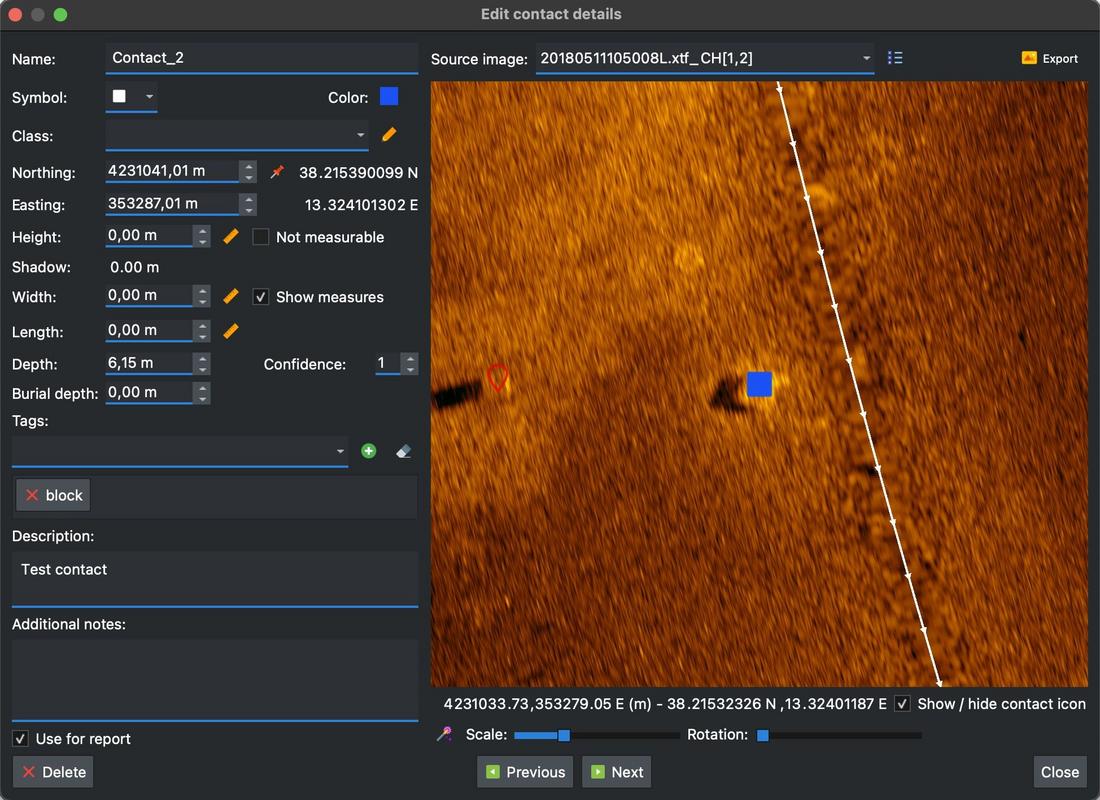
SeaView MOSAIC is the first post-processing and interpretation software for side-scan sonar capable of interactive mosaic editing at full resolution.
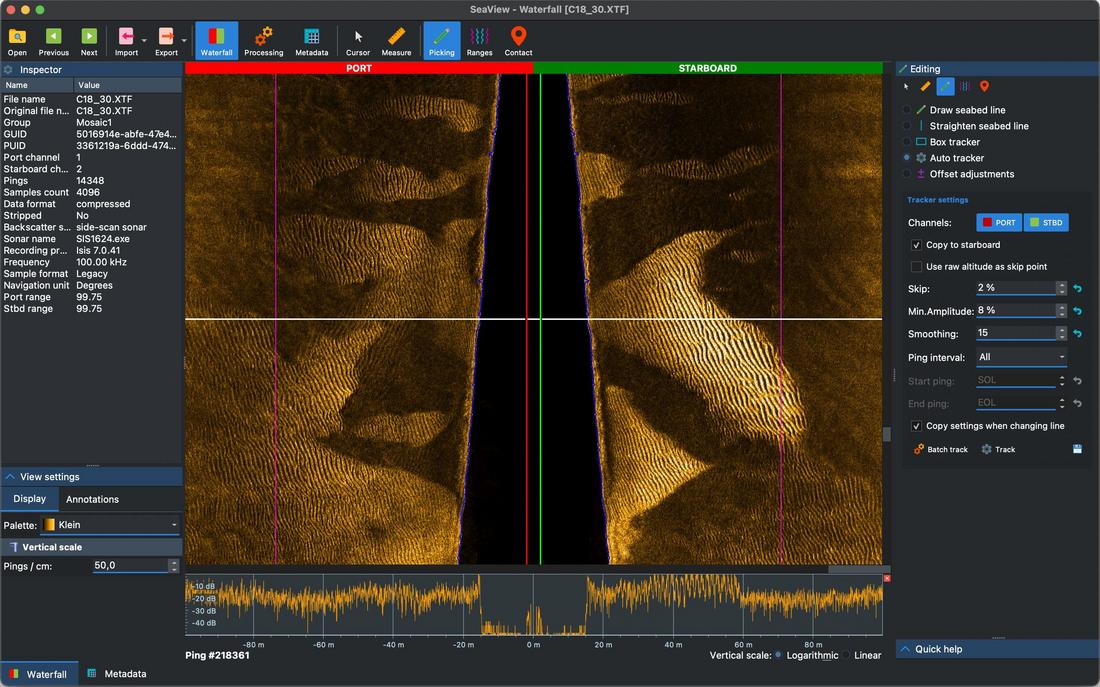
The software also features two novel algorithms: automatic normalization (AGC) and de-striping. These filters produce clean and crisp results, delivering high-resolution seafloor imagery with unmatched quality.
SeaView MOSAIC can export mosaic images at centimetre resolution in just a few minutes.
Manage large datasets (tens of TB) and interpretation databases (tens of thousands of contacts) with ease.
SeaView MOSAIC preserves the same resolution of the waterfall view into the final mosaic output.
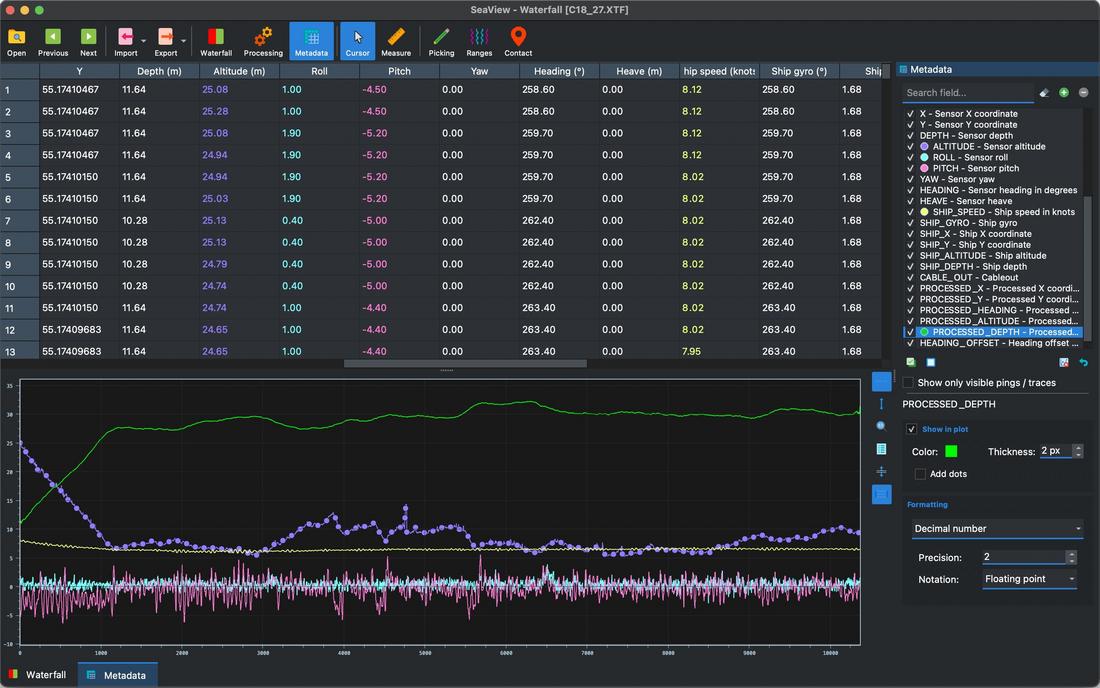
Fully compatible with industry standards
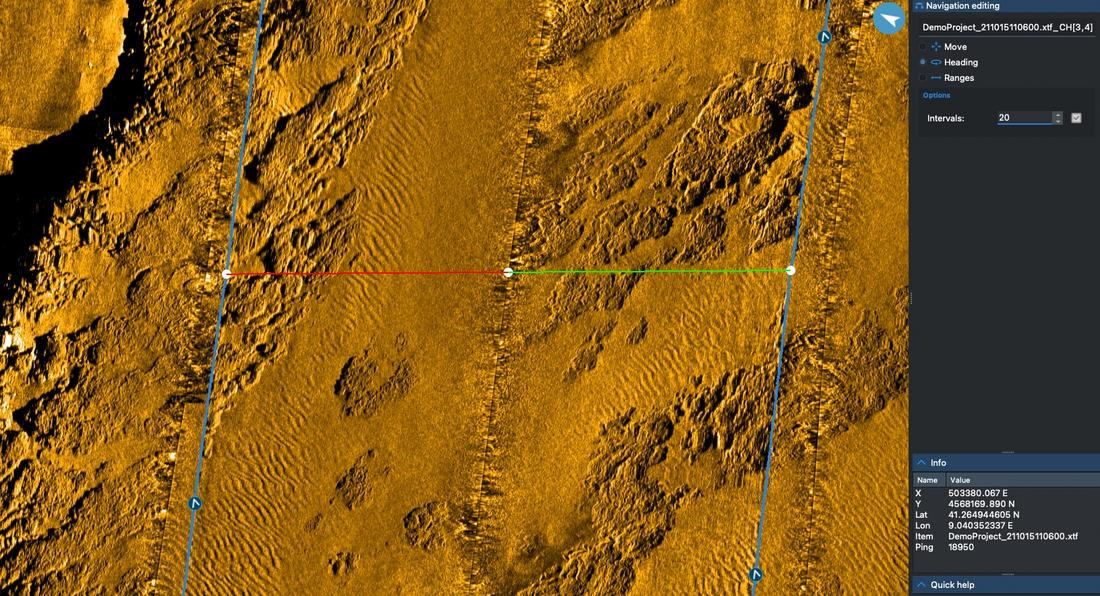
With SeaView you can remove repeated positions, filter heading values and apply layback corrections point by point.
Merging navigation logs into side-scan files recorded from AUVs is easy with our simple navigation import tool.
The advanced editing tools allow you to fix complex navigation issues interactively: adjust position and heading or cut ranges by hand.
Provide daily updates to your client and onshore offices during operations with our incremental SeaView archives.
Internet speed won't be an issue anymore.
SeaView archives support password protection and digital signatures to detect and prevent data corruption.
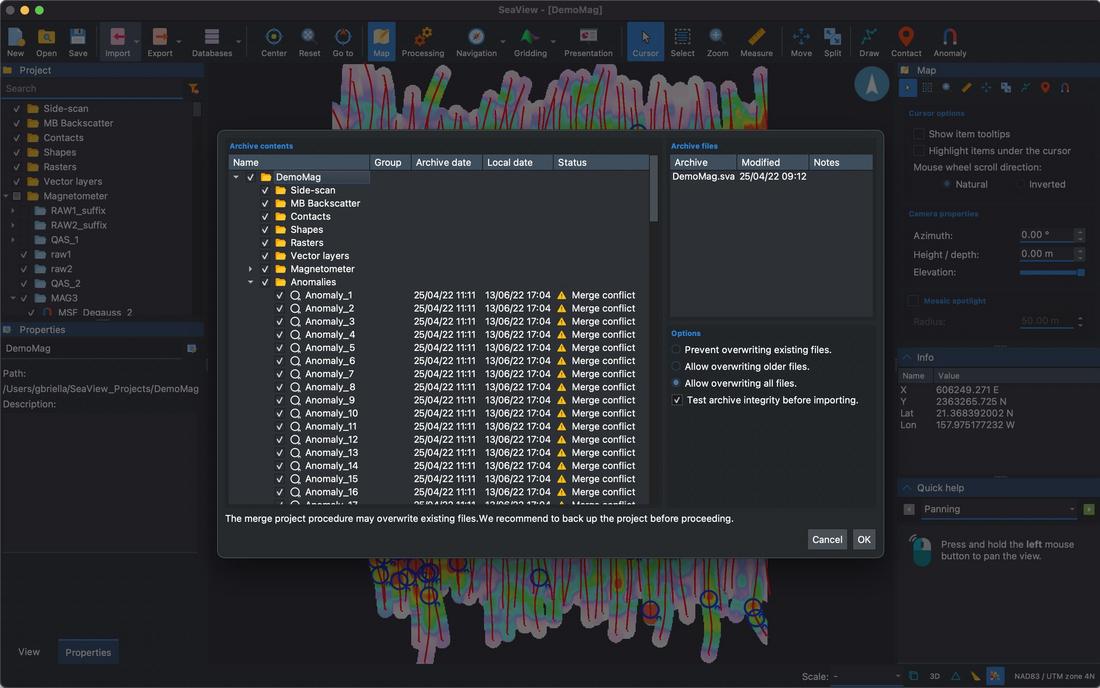
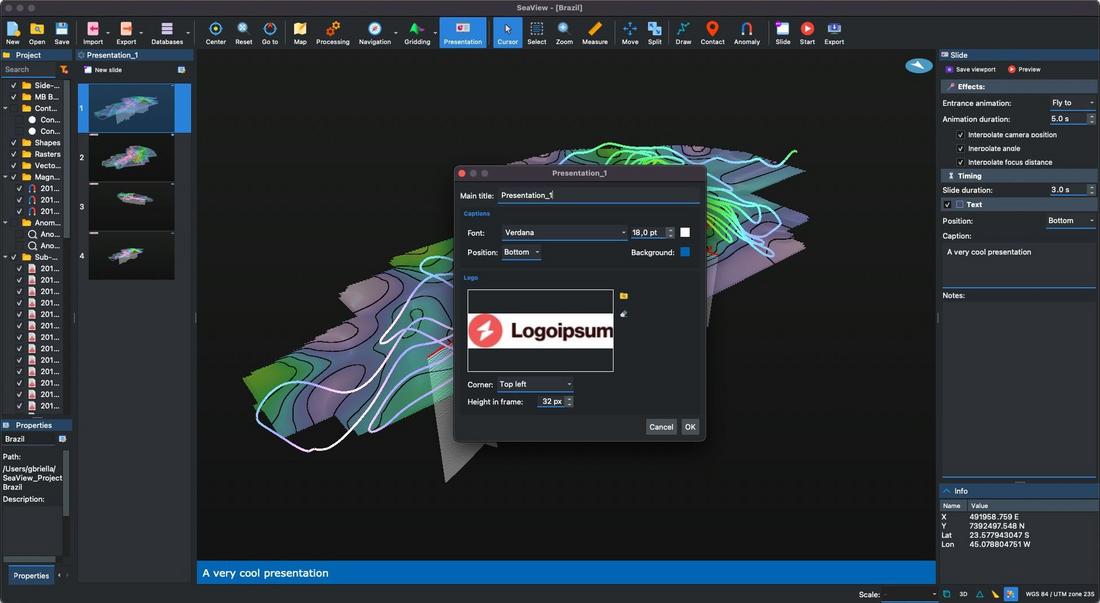
Create video presentations of your project with ease. Define keyframes, animations and captions with a few clicks.
Add your logo in video overlay to emphasize your corporate identity.
Play the presentation preview in SeaView or export it as a video in one click.
Learn more about the other modules in the SeaView suite or contact us for a free trial.
When disaster strikes and you need to restore from a .env.backup.production file, having a clear, tested recovery procedure is essential.
While this protects standard files, it often .env.backup.production depending on how the wildcard patterns are written. If a backup script generates .env.backup.production inside the project root, a careless git add . and git push will upload your production secrets directly to GitHub, GitLab, or Bitbucket. Automated Scanners
What or cloud platform you are using (e.g., AWS, Vercel, DigitalOcean).
The naming pattern .env.backup.production follows a logical structure that has become somewhat standard in the development community. The name consists of three distinct parts: .env (indicating an environment configuration file), backup (signifying it's a backup copy), and production (specifying the environment it's associated with). This convention makes it immediately clear to any developer or system administrator what the file contains and its purpose within the infrastructure.
: Rather than keeping plain-text backup files, consider centralized services like AWS Secrets Manager HashiCorp Vault , which provide encryption and versioning. Restrict Permissions .env.backup.production
Malicious actors run automated bots that scan public repositories around the clock for specific filenames. Searching for .env.backup.production is a common vector because attackers know developers often forget to add backup extensions to their ignore lists. Once leaked, your database can be held for ransom, or your cloud account can be hijacked to mine cryptocurrency within minutes. 3. How to Correctly Secure Your Environment Backups
This specific file serves as a critical safety net within modern DevOps pipelines and server management workflows. It acts as an exact, verified copy of your active production environment variables, stored securely to ensure rapid recovery during a deployment failure, accidental deletion, or server migration. The Anatomy of an Environment Backup File
Creating backups is only half the battle; you must also verify that they can be successfully restored. This involves periodically testing your restoration process to ensure that encrypted backups can be decrypted and that the restored configuration actually works with your application. Documenting where backups live and including them as part of your disaster recovery plan is crucial for maintaining operational readiness.
The Ultimate Guide to .env.backup.production : Securing, Managing, and Recovering Your Production Environment Variables When disaster strikes and you need to restore from a
In modern web development, environment variables are the lifeblood of application configuration. They store database credentials, API keys, encryption secrets, and third-party integrations. When managing a production environment, losing these configurations or experiencing a corrupted configuration file can cause immediate, catastrophic downtime.
# Ignore all environment files .env .env.* *.env *.env.*
The most critical rule of environment variable management is to
Common ways secrets leak include:
Accidental file deletions happen, especially during manual server maintenance or urgent SSH debugging sessions. Running an accidental rm .env command can be catastrophic if the variables are not documented elsewhere. Having an automated, decoupled backup file on the server ensures you can recover configuration states in seconds rather than hours. 3. Blue-Green Deployment Synchronizations
: Ideally, don't use files at all; inject variables directly into the server's RAM or container environment.
Backup files should be stored in a completely separate location from production servers, ideally in a dedicated secrets management system. Using your hosting provider's secrets management solution ensures that private keys remain in your deployment platform, not alongside the encrypted backups. For team environments, consider solutions like that use AES (Fernet) encryption to store, version, and share .env files using Git repositories with built‑in encryption and version tracking.
A developer-friendly secret management platform that syncs secrets across local development, staging, and production environments seamlessly. Summary Checklist for Production Environment Backups and git push will upload your production secrets
In a shell script or deployment routine, the creation of this file usually looks like this: